Posts

Showing posts with the label Ordinary Time

When time is ordinary
Image
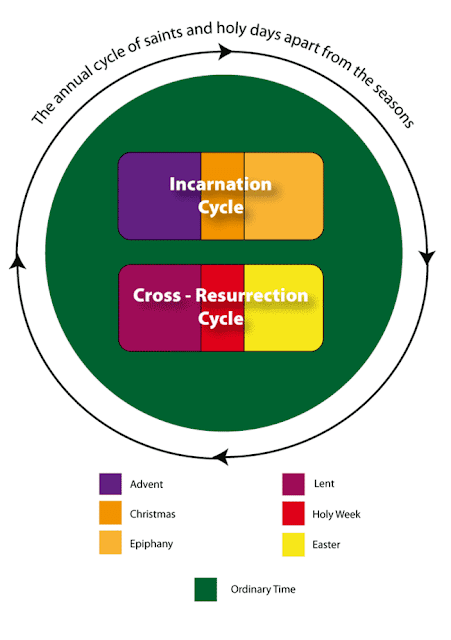
I should probably offer a health warning on this post: there’s no way of explaining the diversity of ways churches name and number the different Sundays of the year without getting a little bit geeky. I have tried to be as clear as possible, but there is a lot of rather messy detail that demands a certain amount of anorak wearing. When I looked at the Christmas and Easter cycles, I described them as swimming in a sea of Ordinary Time. Having told these stories, one of the events around Christ’s birth, the other of events around his death, there’s still well over half a year left over. So having told these stories, the church then reflects for the rest of the year on what it means to live out a life that is faithful to the stories of this Jesus, reading through the main teaching sections of the gospels. These reflections – on what faithfulness to the stories of Jesus looks like – begin with our idea of God. The first Sunday in Ordinary Time is always kept as the Feast of the Most Holy T...
The year starts in November (or sometimes in December)

Image
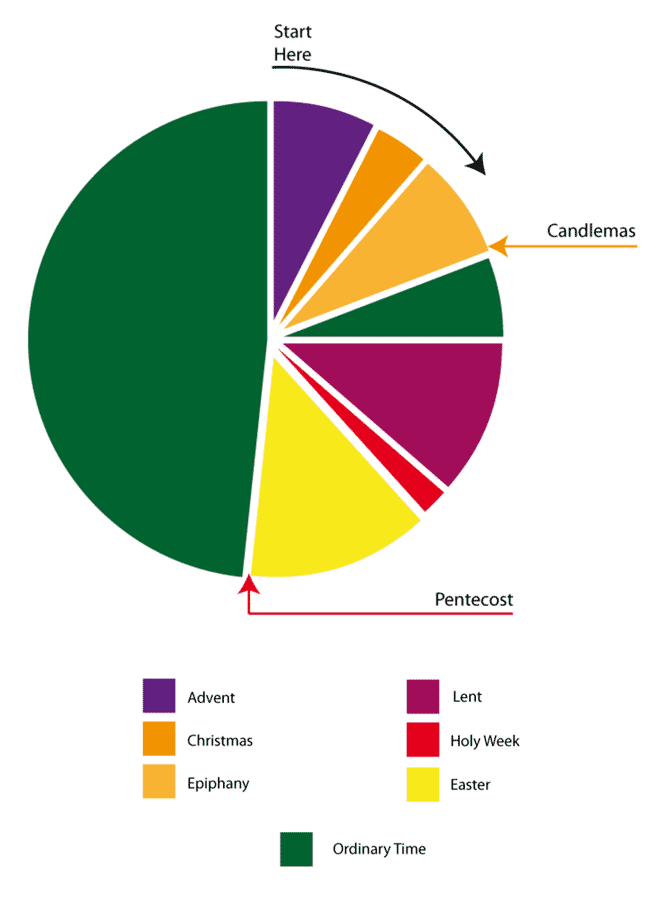
This series now moves on into the second main section: what I am calling the firmware. This is the way in which we organise and develop our actual practice of reading. I begin with the church year. We have a range of different years we organise our life by, and they all start at different times. The school year in September, the tax year in April, the calendar year in January. Historically it’s moved around a bit. So it’s not really at all out of the ordinary that the church year begins four Sundays before Christmas, a date that usually falls at the end of November, and sometimes at the start of December. The pattern of readings followed in Christian liturgy is tied to this year, so that a new cycle of readings begins on the first of the four Sundays before Christmas, called Advent Sunday, from a Latin word meaning “arrival”. The year begins with preparations for the arrival of Jesus. There are different ways of conceptualising the year. Both the diagrams bel...