Posts

Showing posts with the label Lectionary

Welcome to Lection and Liturgy

Welcome to Lection and Liturgy. I have backed up to this site a series of posts making a guide to the whole of the Christian Bible, aimed particularly at those who read it in public. My name's Doug Chaplin, I work as a priest and trainer in the Church of England. Everything here is written in a purely personal capacity. I hope the posts here will help people read Scripture in ways which help their listeners understand what is being read. You can read more about this site in this introductory post , and you can follow it in "book order" using this Reading Guide Index . So here it is: the Bible in 90 posts.
Fitting readings and calendar together

Image
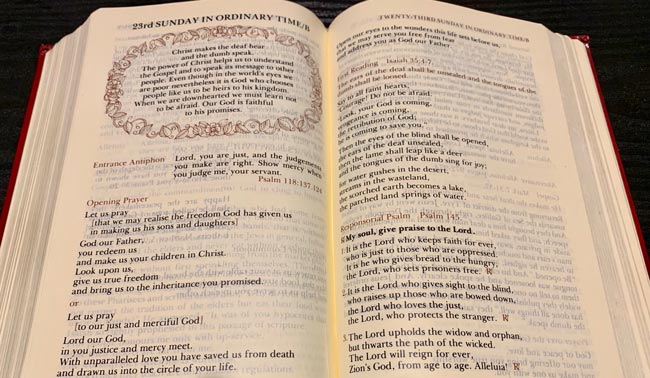
We’ve looked at the pattern of the Church’s year , and at the ways the readings interlink in the Sunday liturgy. Now it’s time to look at how it all fits together over time. I hope, especially as we’ve gone through the calendar in this section, all those different Sunday names have become clearer. This is now where we deal with the last plank of all those detailed references to particular Sundays by years as well as by names. The pattern of readings is based on organising the reading of Scripture over three years. This is done slightly differently depending on whether we are in one of the two main seasonal cycles, or are in Ordinary Time. This difference is potentially greater for the Revised Common Lectionary than it is for the Roman one. The underlying principle of the three years remains the same throughout. Each year is based on one of the first three gospels. This is especially notable in Ordinary Time. John’s gospel is used primarily in the seasons in ad...

The year starts in November (or sometimes in December)

Image
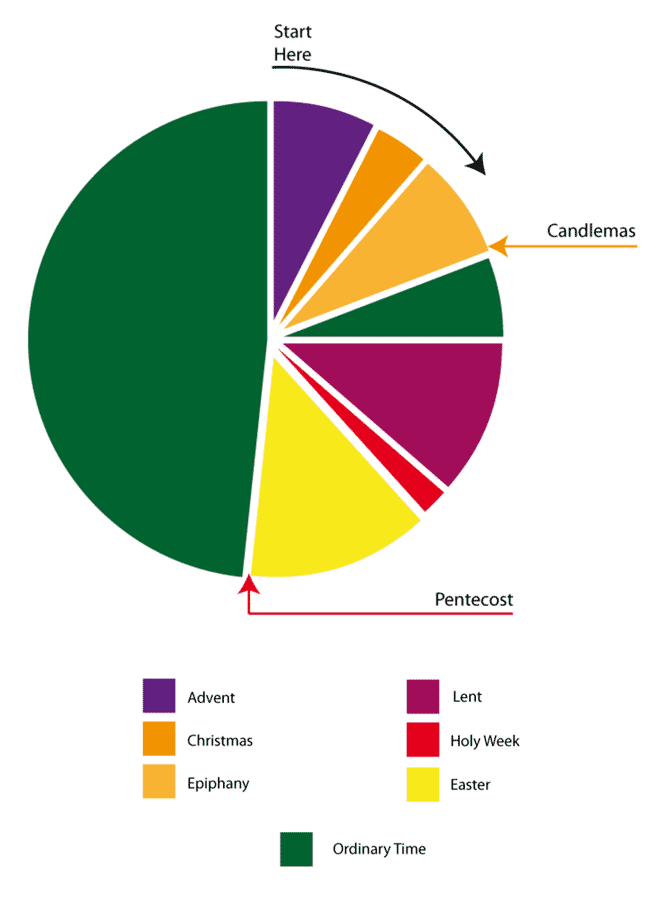
This series now moves on into the second main section: what I am calling the firmware. This is the way in which we organise and develop our actual practice of reading. I begin with the church year. We have a range of different years we organise our life by, and they all start at different times. The school year in September, the tax year in April, the calendar year in January. Historically it’s moved around a bit. So it’s not really at all out of the ordinary that the church year begins four Sundays before Christmas, a date that usually falls at the end of November, and sometimes at the start of December. The pattern of readings followed in Christian liturgy is tied to this year, so that a new cycle of readings begins on the first of the four Sundays before Christmas, called Advent Sunday, from a Latin word meaning “arrival”. The year begins with preparations for the arrival of Jesus. There are different ways of conceptualising the year. Both the diagrams bel...