Posts

Showing posts with the label Paul and Women

House rules and cultural accommodation: the Pastoral letters
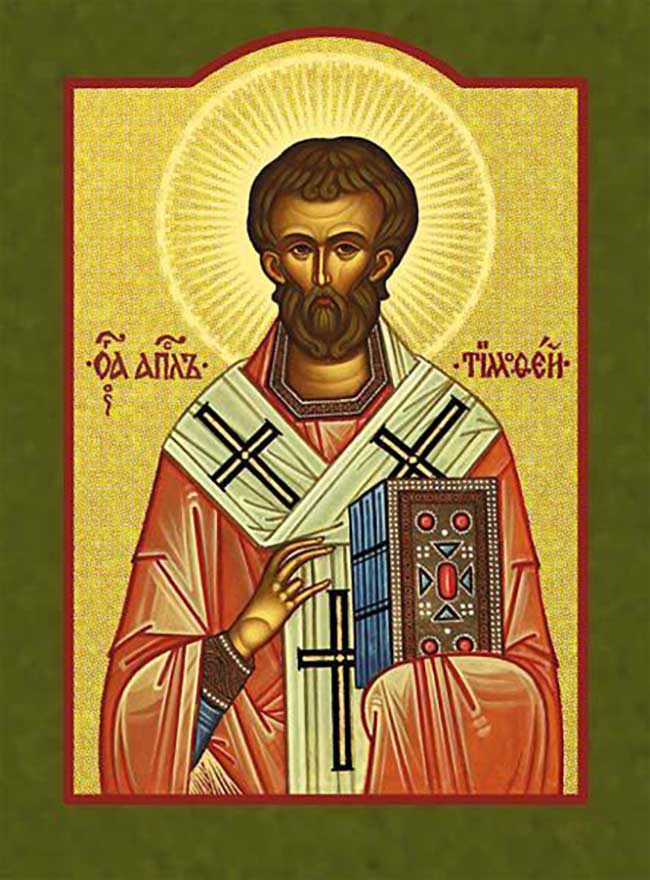
Image
Icon of St Timothy. Via Wikimedia Commons . The Sunday lectionary reads selections from 1 & 2 Timothy through in sequence towards the end of Year C, 1 and uses a couple of short excerpts from Titus in the selections for Christmas Day. As I noted in my introduction to Paul’s letters, these three are sufficiently like each other to be grouped together, and sufficiently different from Paul’s other letters for many people to wonder if he wrote them. Although they are usually called, collectively, the Pastoral Letters, I think they might better be thought of as “organisational letters” written for those who have some responsibility for organising the church. Whether Paul did write them, directly, indirectly or not at all, they are in any case different in form. They are not letters to churches, but letters from a senior to a junior colleague. If Paul (as the letters say) calls Timothy and Titus his “sons” in the faith, we should remember that was not simply a relationsh...

Colonies of heaven: Christianity as a Roman religion in Philippians

Image
Christianity might have been born in a thoroughly Jewish home, but it quickly got sent to a Roman boarding school. In Paul’s letter to the church at Philippi, we see something of that happening. Philippi, like Corinth was a Roman colony, and Paul draws rather more positively on that heritage to shape his language when he writes to the Philippians, than he does in his more troubled relationship with Corinth. Indeed, it may well have been the Philippian church Paul had in mind when he spoke of the generosity of the Macedonian churches (2 Corinthians 8:1-7), appealing to the competitive spirit at Corinth, and trying to get them to up their game in the generosity stakes. Paul envisages in Philippians that his death might be a very real possible outcome of his imprisonment. The picture is the traditional site of Paul’s burial in Rome. Certainly there is a strong note of thanks in the letter, not least for the practical help the Philippians have sent Paul via Epaphroditus (P...

A bold vision of a cosmic church: Ephesians

Image
When we turn from Galatians to Ephesians, the change of tone is startling. This is one of those letters where the tone is rather less argumentative as well as less specific than Paul normally is. For many scholars, that suggests a disciple of Paul summarising some key elements of his master’s teaching. For others, it represents simply a different scribe, and Paul in a more reflective and different mode of teaching. The letter certainly shares Paul’s love of long and convoluted sentences, with Eph 1:3-14 essentially being a single sentence in the original Greek (depending on your view of what a sentence is!). Extracts from Ephesians are mainly read in the summer months in Year B. It also provides a number of epistles for saints’ days. As I say, it seems less specific than many of Paul’s letters, which is a reason some people raise questions about how closely it is connected with Paul himself. Indeed, some of the best and earliest manuscripts don’t actually have a destina...

A radical faith in a faithful Messiah: some themes in Paul’s letters

Image
In the previous post , I looked at some of the general issues involved in reading Paul’s letters. In today’s blog, I want to explore a couple of key themes. There are core ideas which crop up repeatedly in Paul’s thinking; but the specific ways he develops them belong to the different contexts of each individual letter. One idea which crops up in a number of contexts is usually called “justification by faith”. Since some people suggest this is Paul’s main, only, or central theme, we need to spend a little bit of time looking at it here, while saving many other themes for individual letters. It’s probably also worth repeating my previously given health warning: other views of Paul are available, and here we enter one of the more controversial (and occasionally rather bad-tempered) areas of both modern scholarship and church-dividing doctrine. Statue of St Paul in St Paul outside the Walls, Rome. Paul is commonly represented with a sword as a metaphor for the Word of Go...